
I was also an AI skeptic a few years back.
In 2022 a friend back from the US told me, over coffee, that the US military was taking up AI. I had no idea, until that moment, that a technology called artificial intelligence even existed. I went home and looked it up.
The articles I landed on first were the negative ones. Job loss. The death of thinking. Conjecture stacked on conjecture. I read the negative sentiment, took it at face value, and stopped there.
I did not open any tool. I went back to work.
The phase faded only because the topic faded, not because anyone changed my mind. So I am writing this as somebody who held your view first, not somebody who never did.
Why the "AI is not real intelligence" argument falls apart
The argument I kept hearing was never about AI. It was about what the word "intelligence" is allowed to mean. The skeptic camp is not a strawman either. Pew's 2023 short-read on Americans' views of AI reports that Just 10% say they are more excited than concerned. If only one in ten people lean excited, the room you are walking into is mostly the skeptic's room.
The case underneath that mood is plain. AI is pattern matching, the skeptic says, and pattern matching is not "real" intelligence, because real intelligence is human, mysterious, uncopyable.
Fine. But that argument rests on something it never defines, what human intelligence is.
Is the human brain just an algorithm running on experience?
Walk through your house for a second. The alarm clock decides when to wake you. The thermostat decides when to heat the room. The spell-checker decides which word you meant. We have lived with those for donkey's ages and nobody called them intelligence, because they sit inside familiar objects.
The operation is the same shape. Take an input, run a rule, produce an output. The rules are simple, so we shrugged.
Now turn the analogy inward. A human brain takes input, runs rules, produces output. The rules are not simple, the inputs are huge, and the experience that shaped the rules took decades. Strange word, not strange operation.
The honest read on the research is that AI is uneven, not unintelligent.
Concede the ground the skeptic has earned. AI is jagged. Ethan Mollick's On Jagged AGI essay puts it cleanly: In some tasks, AI is unreliable. In others, it is superhuman. That is not a bug story. It is a shape story. The output is uneven because the work is uneven, and that is true of every human expert I have worked alongside in pharma IT.
Now the table turns. The variable the research keeps surfacing is not the model. It is the human standing in front of it. The Brynjolfsson, Li and Raymond NBER working paper on a customer-service rollout reports a productivity gain of including a 34% improvement for novice and low-skilled workers but with minimal impact on experienced and highly skilled workers. Read that twice. The model is not replacing the human. It is amplifying what the human brings. Thin input, thin lift. Strong input, strong lift.
Once you accept that input is the variable, the operating rule writes itself. Mollick's other piece on prompting lands it: There is one major trick that will make your conversations work better: provide context. AI is only as good as the input. Output tracks input. The human is the input. Every human has their own flavor of understanding, and the algorithm on the other side is borrowing yours.
The strongest version of the AI vs human intelligence argument is the one I want to take seriously.
The steelman skeptic is not saying AI is useless. The steelman skeptic is saying that calling pattern matching "intelligence" lowers the bar for what we used to mean by the word, and that the social cost of that re-labelling is real. Automation creep. Deskilling. People trusting fluent outputs that have no expert behind them.
Part of that is right and I will not dress it up. The word "intelligence" carries baggage. The marketing around AI overshoots on purpose, because hype sells subscriptions.
The part that is wrong is the cure. The cure is not to deny that an algorithm is doing something useful. The cure is to name the input. Pattern matching vs intelligence is the wrong fight, because human cognition is also pattern matching with more layers. The argument is not "is this a real mind." The argument is "whose experience is feeding the pattern, and is that experience any good."
Hand the argument back without the dressing.
Why my first ChatGPT answer came back useless.
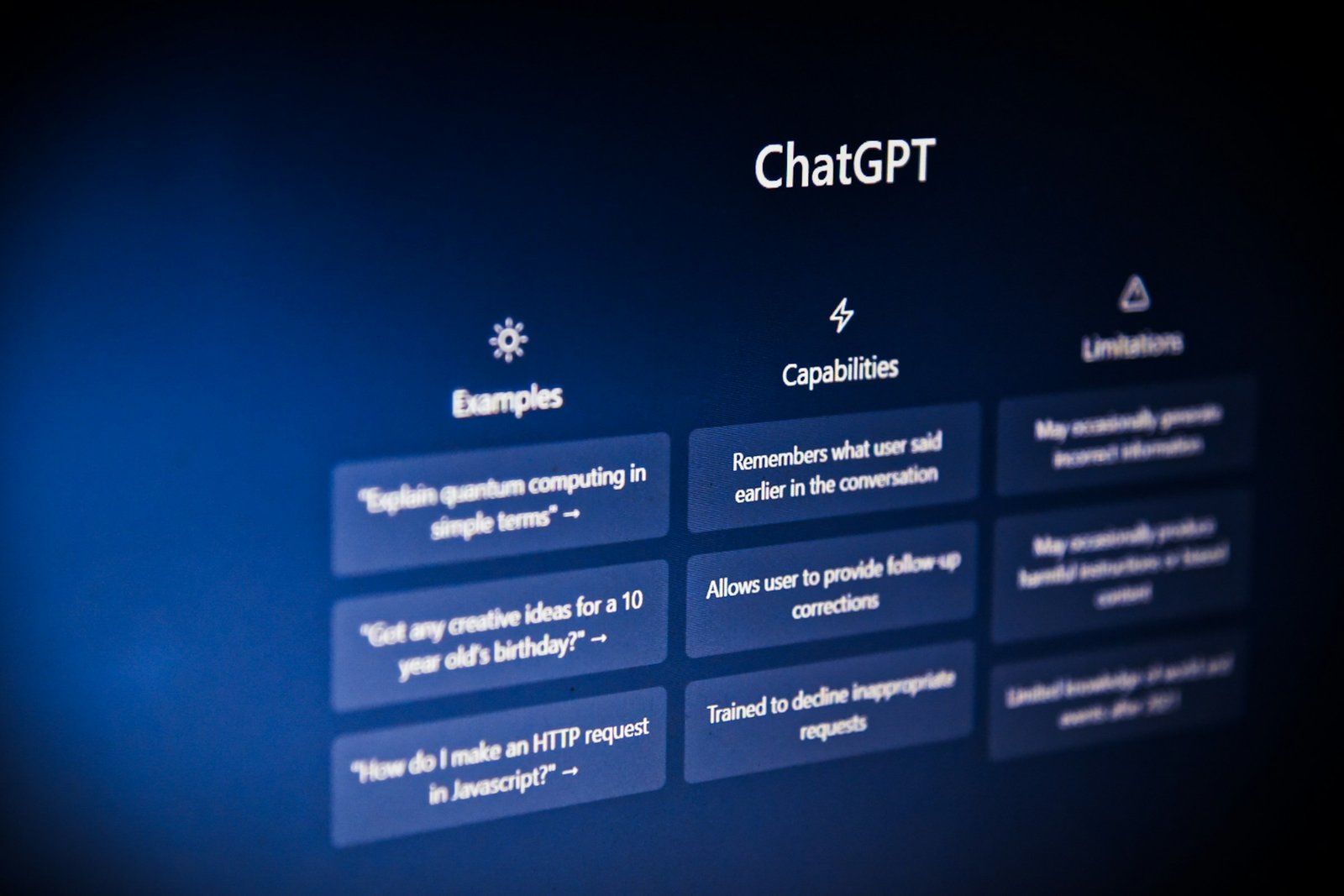
In February 2024 I finally opened ChatGPT for the first time. I treated it like a Google search bar. Three or four keywords, a question mark, enter.
The answer came back fluent, generic, useless. It read like an introduction to a Wikipedia entry I had not asked for. I closed the tab.
For about a week I told anyone who would listen that AI was overhyped. My exact line, which I repeated like a small flag, was "AI is not as good as Google."
The "after" here is not a prompting victory, that came months later and is a different story. The "after" here is a realisation I only had in retrospect. I had given the algorithm a starved input. Three keywords and a question mark. Then I had blamed the algorithm for what came back.
The skeptic and the algorithm were both me. The algorithm read the input I gave it. The skeptic read the output and walked away, the same way the 2022 me had read the negative articles and walked away. Same shape, different decade.
If AI is only as good as the input, then a thin input is a thin verdict, not a verdict on AI.
Treating AI as intelligence does not mean trusting it like a colleague.
The rebuttal I am making is not a permission slip to outsource judgement. If we accept that AI is an algorithm running on the input we give it, two things follow.
The input is your responsibility. Sloppy in, sloppy out.
The output is still your responsibility to verify. Hallucinations, false positives, confident wrong answers all stay on the table. In pharma IT I do not paste sensitive customer data into a cloud model. Ever. And nothing leaves the building until I have read it like a human editor would.
The point of this post is to remove the mystery, not to remove the editor.
There is always going to be a human behind the wheel.
I use AI fluently now in my consulting work. I stay behind the wheel. I ask generalised queries, I do not paste regulated material, I keep a Role / Objective / Background / Data shape for the prompt itself. There is always going to be a human behind the wheel to provide or guide the AI.
So stop arguing with the algorithm. Ask what your input looks like.