
The same two sentences keep coming out of my friends' mouths about AI.
One says, "AI is going to change everything, you have to be on it, this is the biggest thing since the internet." The next one says, "AI is going to take my job, I do not know what my kid should study anymore, everyone is going to be out of work in five years." Two contradictory panics, delivered with equal certainty, by the working professionals I have coffee with. I have heard some version of these two lines from friends, from cousins, from people in my own team who spend their day on the same kind of desk work I do. Neither of them sounds like they are describing a Tuesday afternoon at work.
Neither sentence is coming from the person's own desk.
If both sentences are wrong, why do they sound so certain? Because they are not first-hand observations. They are pulled, almost word for word, from the online hype cycle. LinkedIn evangelists on one side telling you AI will rewrite the economy by Friday. Panic threads on the other side telling you the layoffs are already scheduled. Neither camp is describing what AI does when a working professional sits down on a Tuesday afternoon to answer an email or read a document. The mistake is not AI. The mistake is treating the online noise as signal.
AI is a workflow tool, the way Excel and PowerPoint were once workflow tools.
Nobody today calls Excel revolutionary. Nobody says PowerPoint took anyone's job. Both were once new workflow tools that a working professional had to learn once, and then just used. The person who learned the formula bar in 1998 did not replace the person who did not. They spent an afternoon on what used to take a week, and went home. AI is the same shape of tool. Not a miracle. Not a threat. A skill you learn once, then use for the rest of your career. When I say "makes your life much easier," that is the register I mean. Not "unlock potential." Just easier.
The numbers say the workflow-tool version is what is happening.
The panic camp is not imagining things. Pew's 2023 survey found that Overall, 52% of Americans say they feel more concerned than excited about the increased use of artificial intelligence. That is a feeling, measured carefully, and I take it seriously. But a feeling is not a job outcome. It is the temperature of the room, not the number on your paycheck.
At the same time, Microsoft and LinkedIn's 2024 Work Trend Index reported that 75% of knowledge workers use AI at work today, and 46% of users started using it less than six months ago. Three quarters of the desks the panic threads are worried about are already using AI, and almost half of them started using it in the last six months. The "will it take my job" future tense is already the present tense. And the sky has not fallen.
What are those workers doing with it? Anthropic's Economic Index puts a number on it. AI use leans more toward augmentation (57%), where AI collaborates with and enhances human capabilities, not toward replacement. AI-alongside-human is winning by a majority.
So why do both hype camps sound believable at the same time? Because they are each staring at one edge of an uneven surface and generalising. As Ethan Mollick put it in his essay on jagged AGI, In some tasks, AI is unreliable. In others, it is superhuman. The evangelist is holding up a superhuman example. The panic thread is holding up an unreliable one. Both are real. Neither is the whole shape.
The panic camp is not making it up, and the evangelists are not lying either.
Both camps have a real thing underneath the noise. The panic camp is reacting to genuine displacement of specific tasks. If the first draft of your email used to take you twenty minutes and now takes thirty seconds, that is a real change in the work, and the fear that a manager will notice is not invented. Dismissing that as "just hype" is what makes the essay preachy, so I will not do it. The evangelist camp is reacting to real, measurable productivity moves on specific workflows. Also real. The mistake sits in the same place for both camps. They take a task-level change and inflate it into a career-level verdict. A tool got faster at one part of your job. That is worth learning. It is not worth panicking about, and it is not the second coming either.
The moment I stopped listening to the hype was the moment AI drafted an email I had been rewriting for twenty minutes.
A customer was agitated about a delay. The delay was not from my side. It was from the customer's own IT department, but the customer was in no mood to hear that. I had to write the reply. Senior, calm, no blame, move things forward. I sat there for twenty minutes. Type and remove. Type and remove. Every sentence had a second meaning. I would draft a line, read it back, hear it land badly, delete it. So I asked AI to write it. 30 seconds. The response read like it had heard me think. It understood the dilemma, the tone I needed, the part I could not say. I edited two phrases and sent it. That was the moment AI won me over.
That is what Excel did for arithmetic in 1998. That is what AI did for a hard human message in 2024. Not revolutionary. Not job-ending. Just a workflow tool that took twenty minutes down to 30 seconds.
Believing your own workflow-tool win is where the second mistake begins.
Before the customer email happened, I was on the panic-and-dismissive side of the fence myself, for a quite some time.
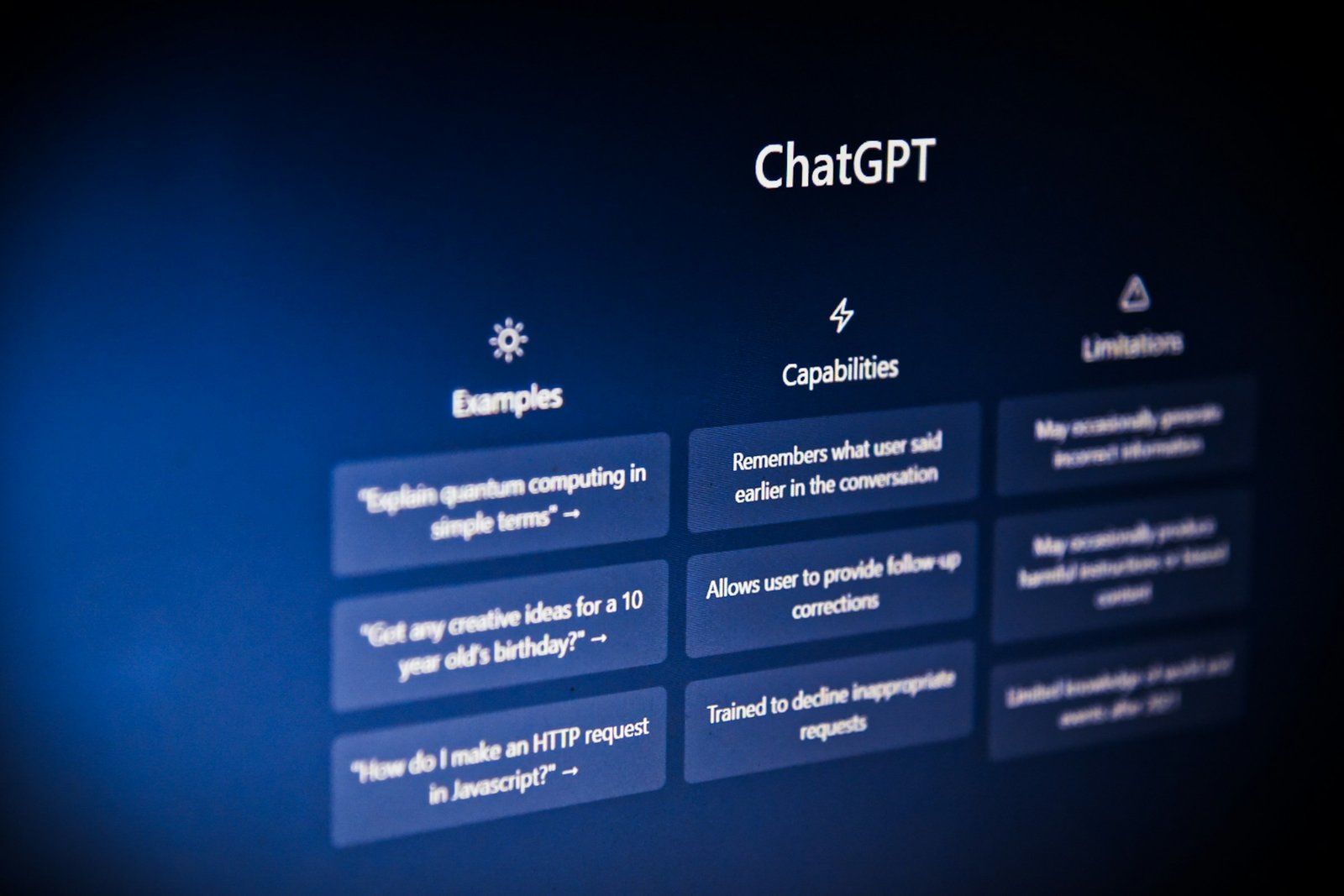
In February 2024 I opened ChatGPT for the first time. I treated it like a Google search bar. Three or four keywords, a question mark, enter. The answer came back fluent, generic, useless. I closed the tab. For longest time I told anyone who would listen that AI was overhyped. My exact line was "AI is not as good as Google." I walked off. Little did I know that both are different players in different games.
If I had stopped there, the way most of my friends did after one bad try, the customer email never happens. That is the first failure mode. The second is the opposite one. Treat one workflow win as a licence to trust AI everywhere, skip the read-back, skip the edit, and you become the LinkedIn evangelist you were trying not to be. Both failures are the same failure with different signs. Generalising a single task into a full verdict.
The question is not whether AI is a miracle or a threat.
The right question is the one you are already qualified to answer at your own desk. Which task on your plate this week would be twenty minutes faster if you stopped listening to the hype and just tried it? Pick that one. Try it once. Then decide.